

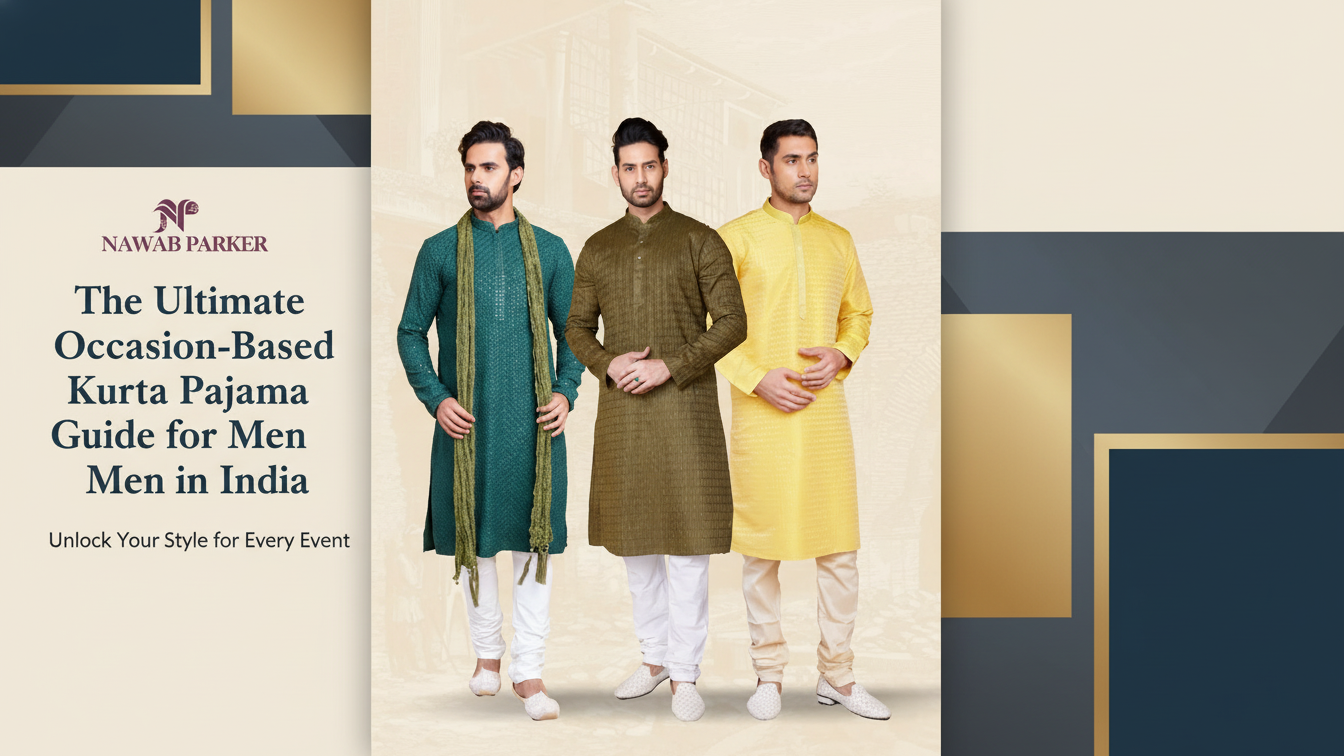
A well-styled kurta pajama can carry you through every milestone, from your best friend’s wedding to a casual Friday at work. As a brand that dresses men for all of these moments daily, we know that the secret lies in matching your kurta’s fabric, color, and detailing to the occasion.
This guide gives you the decision logic: what works, what fails, and how to dress correctly for each setting, with quick tips up front and deeper insights on what to wear (and what not to) for weddings, festivals, religious ceremonies, casual days, and beyond. Let’s get you looking like the best-dressed man in the room.
Short on time? Use this quick-reference guide to nail your look in seconds, then dive into the detailed breakdowns below for styling secrets.
Kurta Pajama Quick-Reference Sheet
| Occasion | Recommended Kurta Pajama Style | What to Avoid |
| Pre-Wedding (Haldi/mehndi) | Light cotton or linen kurta in bright haldi yellow or vibrant hues; minimal embroidery for comfort and easy cleaning. Pair with a simple pajama or churidar and sandals. | Heavy fabrics or dark colors that feel too formal; anything too expensive (it may get stained with turmeric or henna!). |
| Sangeet/Cocktail Party | Stylish silk or blended fabric kurta with subtle shine or minimal sequins. Deep colors (navy, maroon) or fun jewel tones. Can add a Nehru jacket for flair. Wear with churidar and comfortable mojaris for dancing. | Restrictive outfits that hinder dancing; overly casual cottons (this is a party—dress up!). |
| Wedding Ceremony | Richly embroidered or embellished kurta (silk, brocade) in classic tones like gold, cream, or deep red. If you’re close family or the groom, add a coordinating dupatta or stole. Pair with fitted churidar and traditional juttis. | Plain or dull outfits that underwhelm; clashing loud colors (don’t upstage the groom with neon!). Guests should avoid wearing the bride/groom’s primary colors. |
| Reception | Elegant, well-tailored kurta or Indo-western sherwani in darker shades (black, charcoal, midnight blue) with minimalistic embroidery. Pair with straight-cut pajamas or trousers and polished loafers or juttis. | Daytime-bright colors or excessively heavy embroidery (receptions are often evening semi-formal events). Steer clear of casual sandals here. |
| Festivals | Festive kurta in vibrant colors (bright orange, green, royal blue) or with traditional prints. Choose breathable fabrics (cotton for day puja, silk for evening). Match with pajama or dhoti and ethnic footwear. | All-black or all-white looks (festivals beg for color!); very Westernized styles that dampen the cultural vibe. |
| Religious Ceremonies | Simple, conservative kurta pajama set, often in white or soft neutral tones. High-quality cotton or cotton-silk blend for comfort. Minimal to no embellishments. | Flashy designs, loud prints, or showy accessories, maintain reverence. Avoid sleeveless or overly tight fits out of respect. |
| Casual & Office Ethnic Day | Light, solid-colored or modest patterned kurta (short or knee-length) in cotton for comfort. Pair with jeans or chinos for a modern touch, or a crisp pajama for a classic look. Stick to muted or medium tones (pastels, earthy colors) for office. | Extremely ornate wedding-style kurtas at work (overkill); flip-flops or running shoes (opt for loafers or neat sandals). Make sure the kurta is well-ironed, not wrinkled. |
(The table gives you the answers. Now let’s understand why the kurta pajama works across so many situations in the first place.)
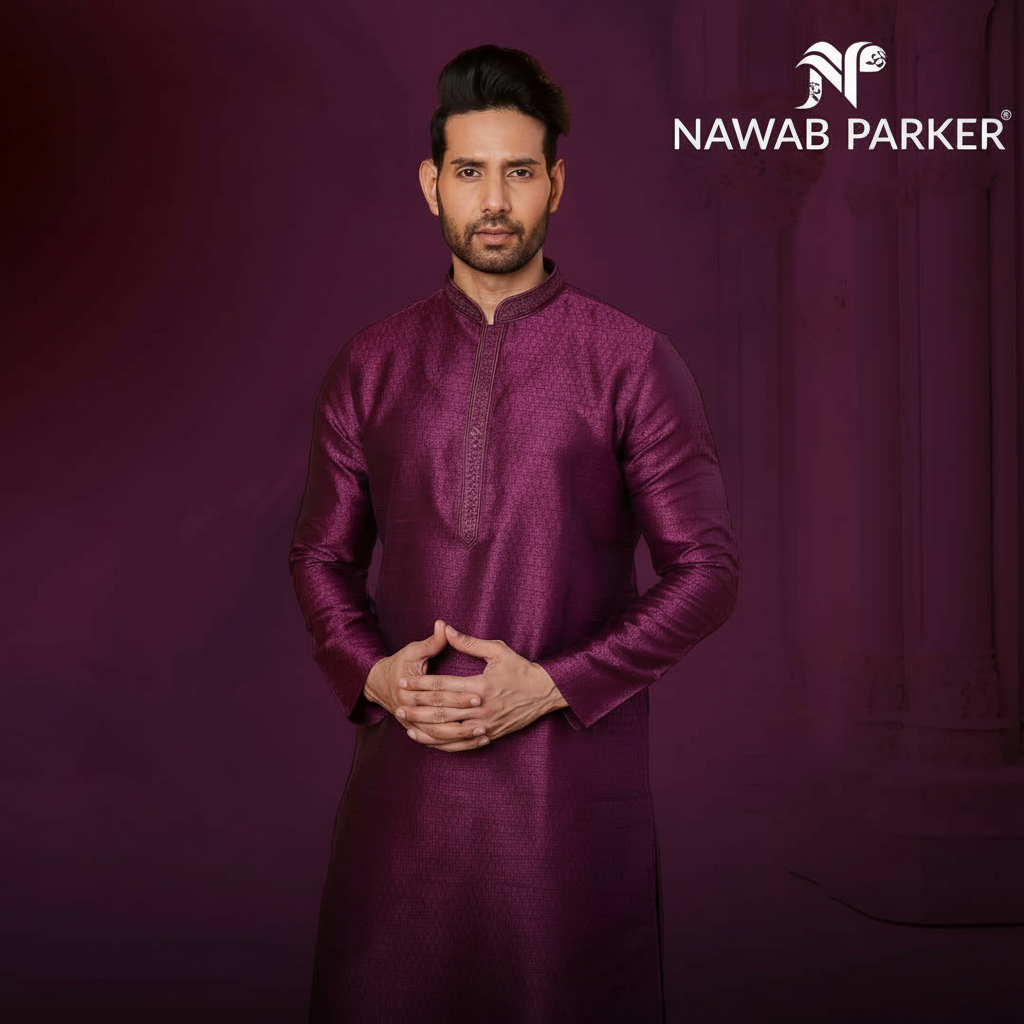
The All-Occasion Appeal of the Kurta Pajama
Why is the kurta pajama such a trusted go-to for virtually any Indian occasion? It works because it solves three things at once: comfort, cultural correctness, and flexibility. Traditionally a two-piece garment, a long tunic-like kurta paired with loose pajama trousers, this outfit has evolved over centuries to suit different regions and events.
Today’s kurta pajamas honor those roots while embracing modern trends, making them suitable for everything from daily wear to high-profile celebrations. Key reasons for their all-occasion appeal include:
- Comfort Meets Style: Typically made from breathable fabrics like cotton, linen, or light silk, kurta pajamas allow ease of movement, vital for long celebrations or energetic dances. Yet they can be embroidered or tailored in rich fabrics for a more luxurious look when needed.
- Versatility in Design: Kurta pajamas come in myriad styles, short or long lengths, straight or asymmetrical hemlines, simple solids or vibrant prints. This means you can find a kurta pajama ensemble that fits the tone of any event. A plain cotton kurta might be perfect for a modest puja, whereas a heavily embellished silk kurta could be stunning at a wedding reception.
- Layering Potential: It’s easy to elevate a kurta pajama with layers and accessories. Throwing on a Nehru jacket, bandi waistcoat, or a stole can instantly transform the outfit’s formality and style. For instance, adding a tailored jacket or bandhgala can create a fusion look that works for festive parties as well as formal gatherings.
- Cultural Symbolism: Donning a kurta pajama is a way to honor tradition. Wearing ethnic attire during important festivals and rites is seen as a mark of respect and joy in India. Each occasion often has preferred colors or styles (as we’ll explore below), and choosing the right kurta pajama helps you partake in that shared cultural expression.
Once you understand this flexibility, the next decision becomes obvious: not every man at an event should dress the same.
Who Are You at This Event?
Here’s a simple truth most men learn the hard way: the “right” kurta pajama is not only about the occasion, it’s also about your role at that occasion. The same white cotton kurta can look perfectly respectful on a guest… and strangely underdone on the groom’s brother. That is not fashion drama. That is just how Indian events work.
Before you pick fabric or color, ask yourself two questions:
1) Am I a regular guest, close family, or the main person?
2) Am I going to be in the spotlight (photos, stage, rituals), or mostly in the crowd?
Once you answer that, your outfit becomes easy.
If You’re a Regular Guest (Not Close to the Hosts)
You have the most freedom and the highest chance of going too plain. A wedding guest kurta should look intentional: clean fit, festive color, and just enough detailing to show you tried. Think cotton-silk, light jacquard, or subtle embroidery—nothing that looks like groom-wear, but also nothing that looks like daily wear.
If you are confused, choose a rich solid color (navy, bottle green, wine, or maroon) with minimal work. It reads dressed-up without screaming for attention.
If You’re Close Family (Brother, Cousin, Uncle, Immediate Circle)
Now you are in every photo. This is where you step it up: better fabric, sharper fit, and cleaner finishing. You can wear richer silks, brocade textures, and a Nehru jacket without feeling overdressed. A lot of families also coordinate outfits (not identical, just complementary), and when done well, it looks fantastic in group pictures.
Quick rule: match the “family level” of dressing, but do not compete with the groom. If the groom is in heavy ivory-gold, you go elevated… not identical.
If You’re the Main Celebrant (Groom / Host / Honored Guest)
This is your moment to look like it. You are allowed to go richer, heavier, and more detailed; the event is literally built around you. Just keep one practical point in mind: weddings are long. If your outfit looks incredible but you cannot breathe, sit, or lift your arms, you will hate it by hour two.
A Small Note on Regional & Community Norms
India has different “dress expectations” depending on where the event is and which community is hosting. If you are attending a function outside your usual context, it is worth a quick check with family or the hosts (especially for things like temple etiquette, head covering, or dhoti vs pajama expectations). The best-dressed man is usually the one who looks stylish and culturally aware.
Weddings: Steal the Spotlight The Right Way
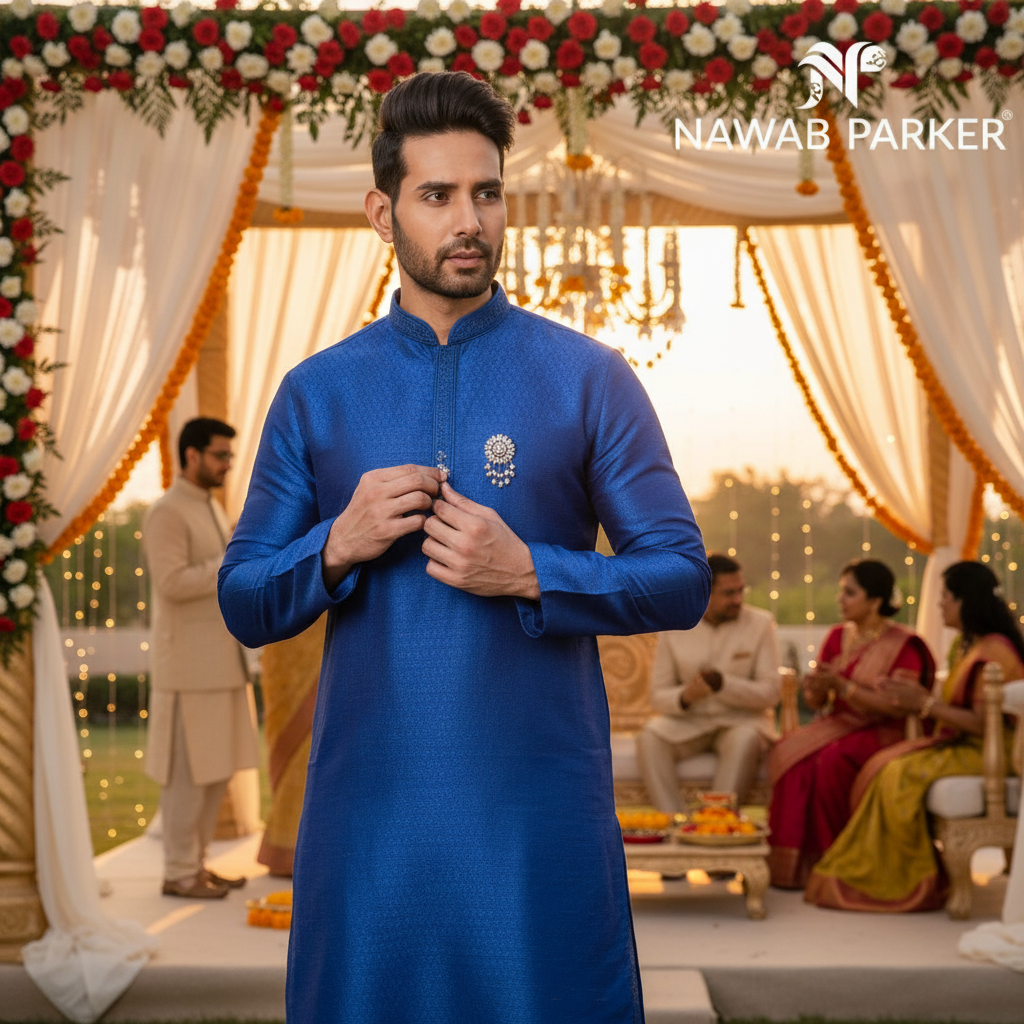
If there is one occasion where these decisions matter the most, it is an Indian wedding. The good news: a kurta pajama can be adapted to every wedding function, from the messy haldi to the formal reception. The key is to dial your outfit up or down based on the ceremony.
Weddings in India are lavish affairs, and men’s attire for these events needs to rise to the occasion. While grooms often opt for sherwanis or achkans, a beautifully designed wedding kurta pajama can be just as elegant, especially for daytime ceremonies, pre-wedding events, or for wedding guests. The key is to choose rich fabrics, opulent detailing, and accessories that add a royal touch.
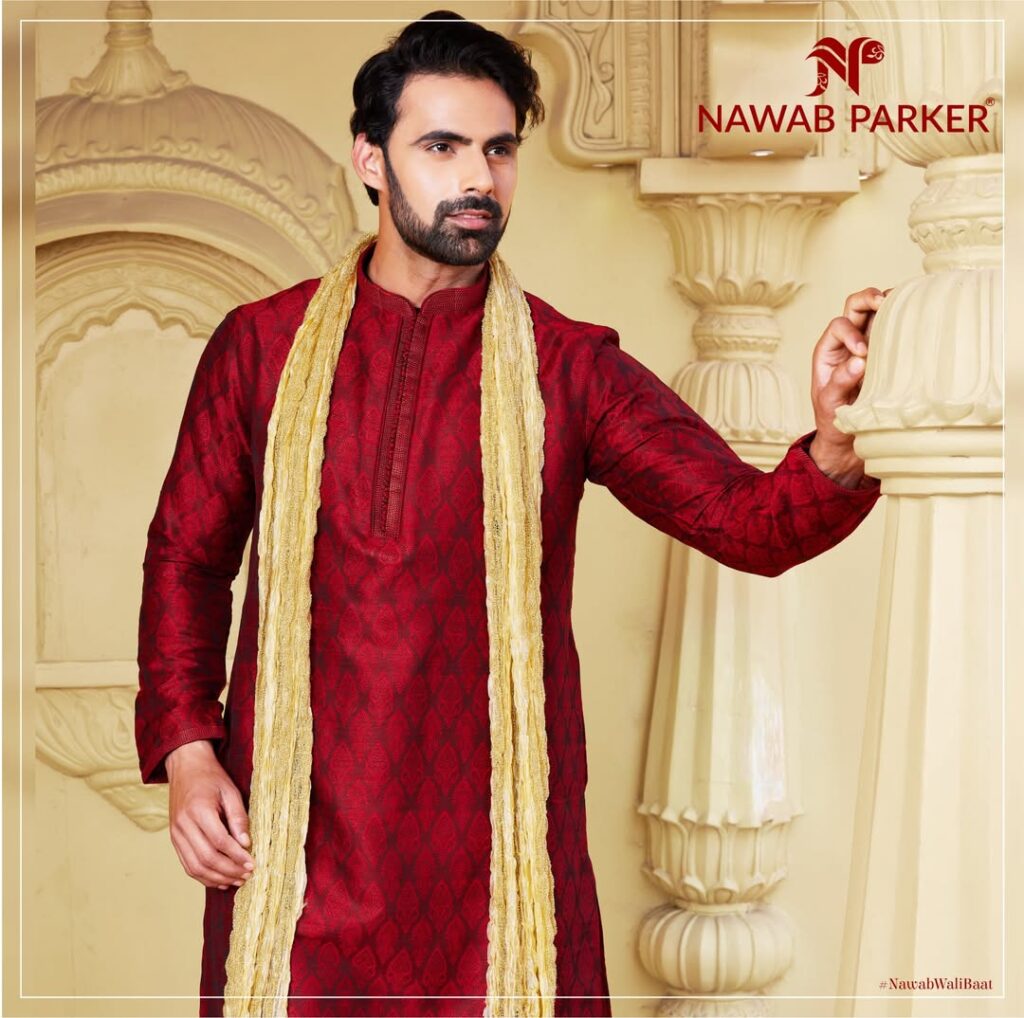
When it comes to weddings, silk kurta pajamas exude elegance and are a top choice. The luxurious texture of silk instantly imparts a regal look that’s perfect for nuptial celebrations. For instance, a cream or golden silk kurta with subtle brocade work or tone-on-tone embroidery can look stunning for a traditional Hindu pheras ceremony.
If you prefer more color, maroon, navy blue, or deep green silk kurtas are popular for evening weddings, as they signify prosperity and festivity. Many wedding kurtas feature side slits and a mandarin (band) collar for a classic silhouette. Pair such a kurta with a well-fitted churidar pajama in a complementary color (or a contrast like off-white) to maintain a balanced, elegant look.
To complete a wedding ensemble, accessorize thoughtfully. Men often wear a matching or contrasting safa (turban) at big weddings, a practice especially common for close relatives of the groom or in North Indian weddings, which instantly elevates the kurta pajama to a more formal, royal outfit. You might also drape a dupatta or stole over one shoulder; choose one with a bit of zari or embroidery that complements your kurta.
Traditional footwear like jodhpuri or mojari shoes (leather slip-ons often with embroidery) are ideal to round out the look. Don’t shy away from a piece of jewelry: a classy brooch on the chest or a string of pearls (mala) can add to the royal vibe if you’re the groom or a close family member.
Color & Embellishment Tips: Indian weddings celebrate color. If you’re the groom or the closest family, you can coordinate with the bride’s outfit palette, for example, if the bride wears red, the groom’s kurta might incorporate a hint of red in the embroidery or accessories for a harmonious look.
For guests, rich jewel tones (emerald, ruby, and sapphire blues) or warm tones (marigold yellow and royal purple) in kurtas work wonderfully. Avoid plain white or black for Hindu weddings; white can be seen as too plain or even a mourning color in some contexts, and black is often considered inauspicious for happy occasions.
Instead, go for ivory if you want a light shade, as it’s considered auspicious and elegant. In terms of embellishments, weddings can handle bling: zari (gold/silver thread work), resham embroidery, mirror work, and sequins are all fair game. A heavily embroidered wedding kurta for men with intricate motifs can be a showstopper; just ensure the fit is comfortable so you can dance and move with ease.
Crafted by Nawab Parker — rich textures, ceremonial colors, and silhouettes made for grand moments.
Pre-Wedding Events (Haldi, Mehndi & Sangeet)
Haldi Ceremony:
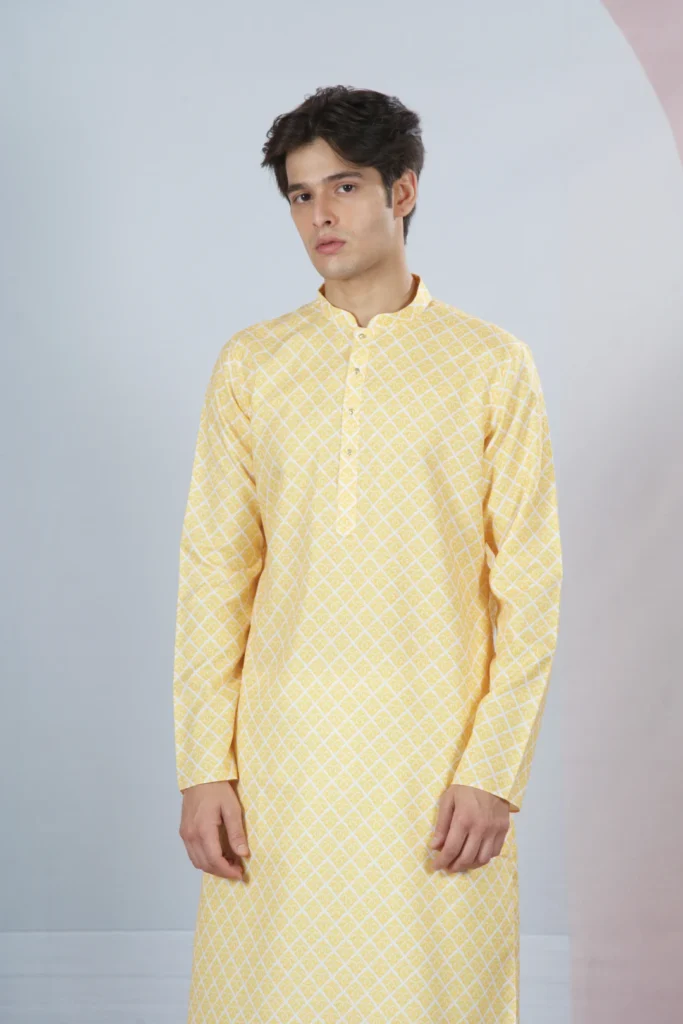
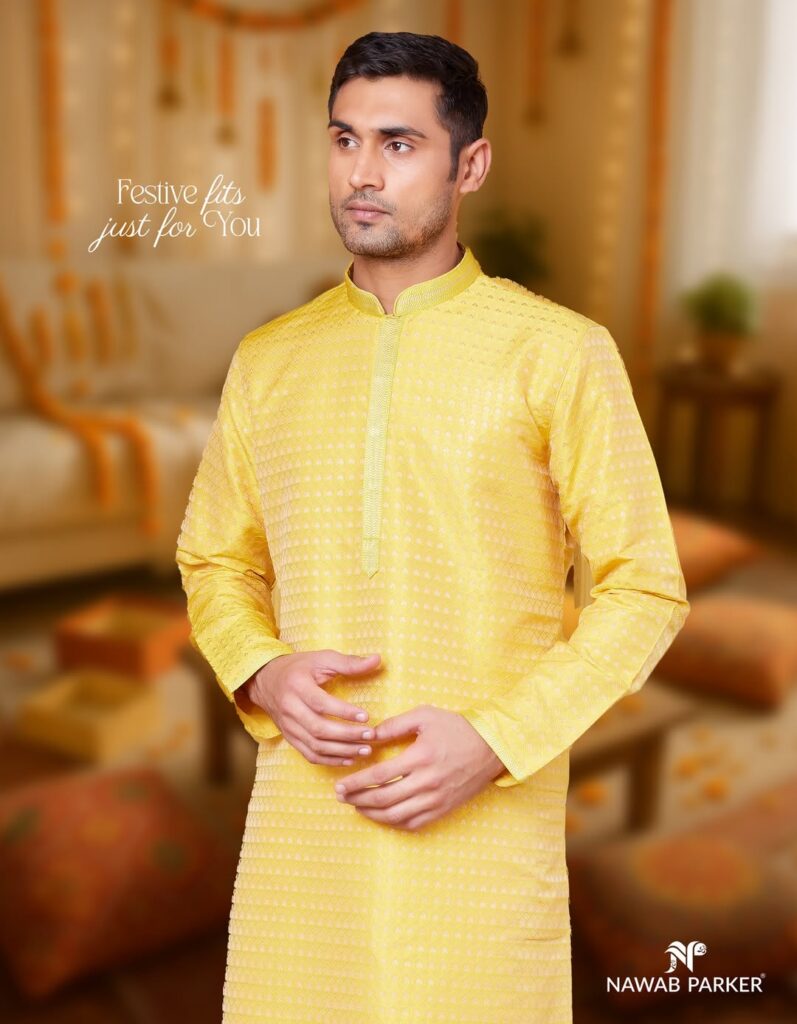
This daytime ritual is all about turmeric paste and fun chaos. Your kurta for haldi should be vibrant and low-fuss. Wear a simple cotton kurta pajama in a yellow or marigold shade (a nod to tradition) or any bright, cheerful color. Keep the embroidery minimal or nonexistent; there’s a high chance of staining, and you don’t want to ruin an expensive piece.
Roll up your sleeves (literally) and opt for open sandals or comfortable slip-on shoes that you won’t mind getting dirty. Never wear heavy sherwanis or dark colors to a haldi; you’ll look overdressed and out of place amid the yellow paste and flower petals.
Mehndi Party:
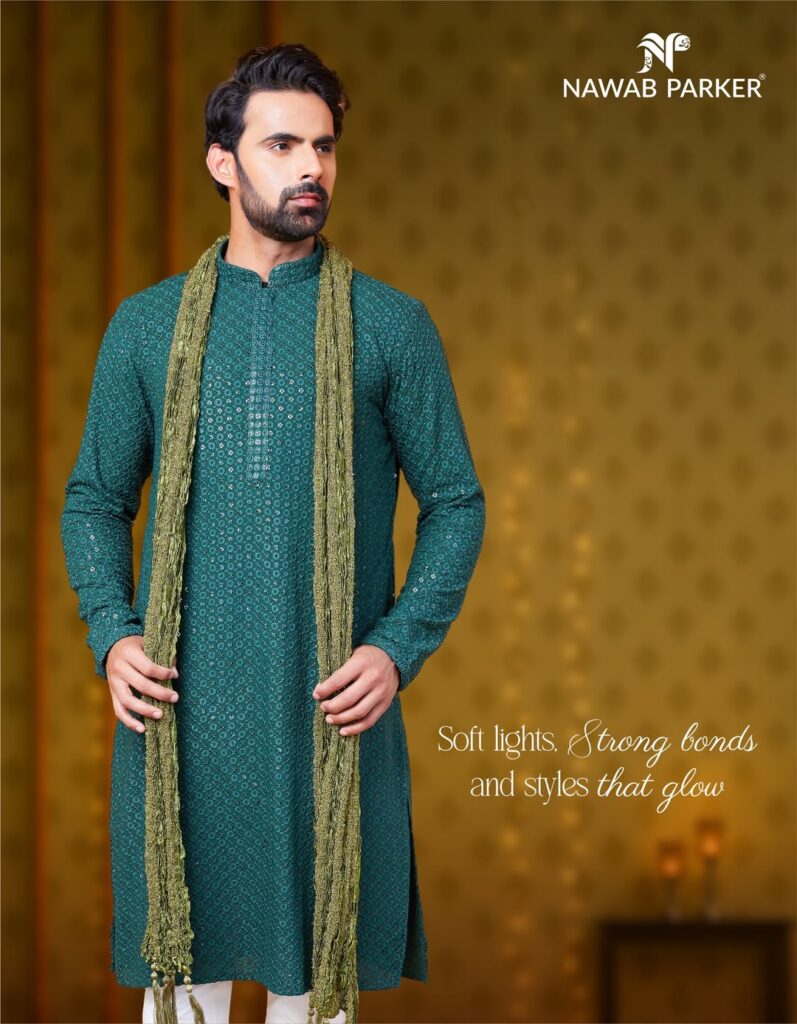
Whether it’s your own or a friend’s, a mehndi (henna) function is a vibrant affair. You’ll often see green themes (for fertility and prosperity), so a green kurta is a popular choice, but not mandatory. Feel free to choose a kurta in a bright color or playful print. The fabric should still be breathable (you might be sitting for a while getting henna applied or dancing with friends), so lightweight silk blends or cotton-silk are ideal.
Pair your kurta with a contrast pajama or even Patiala-style loose pants for comfort. Since it’s a festive but informal vibe, you can try a Pathani kurta pajama for a trendy yet traditional look; its longer, flared silhouette adds a dash of drama perfect for mehndi nights.
Just avoid anything too stiff or tight; comfort is crucial so you can move and enjoy.
If you are dressing specifically for a mehndi night, start with our Kurta for Mehndi collection and filter by lighter fabrics and brighter shades.
Sangeet & Cocktail Night:
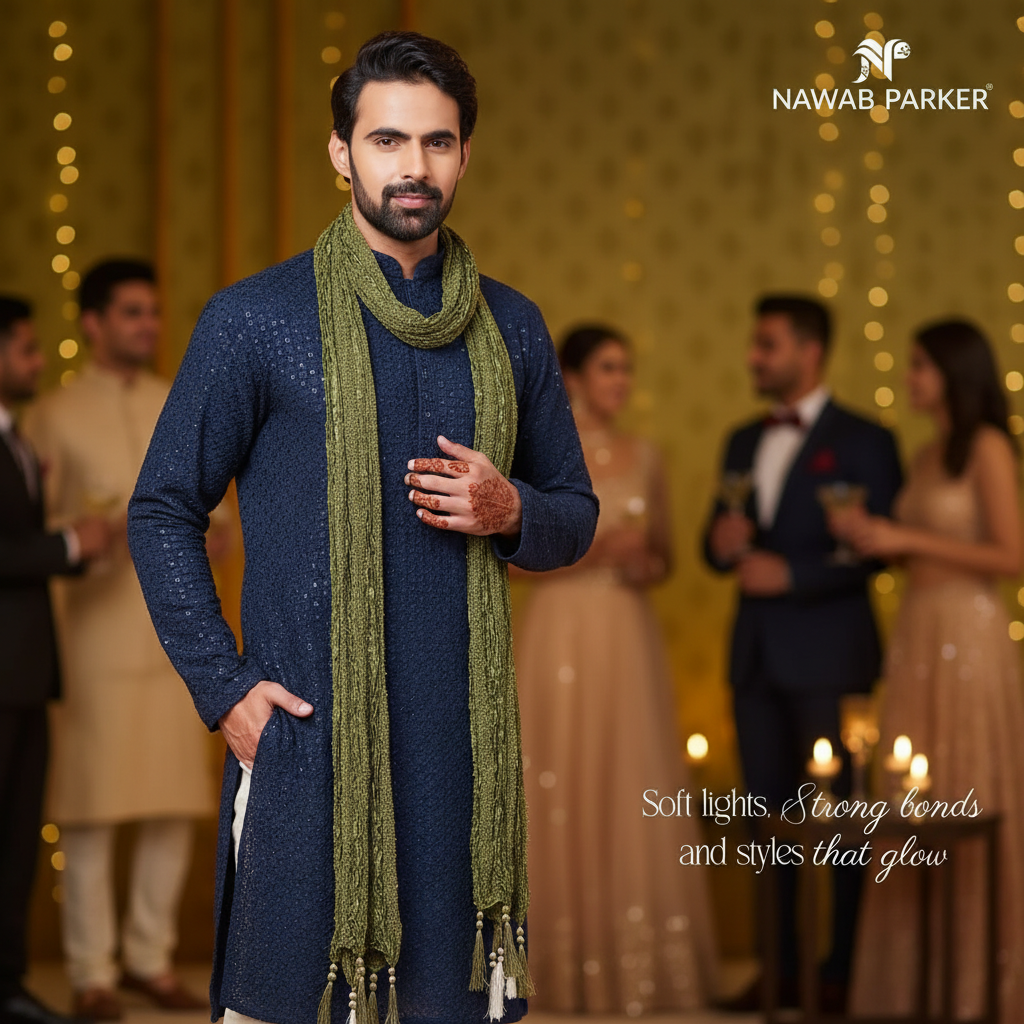
Here’s your moment to shine (literally). Sangeet is essentially a big dance party, and cocktail night adds a modern twist, sometimes they’re combined into one epic evening. Go for a more glamorous kurta pajama ensemble. Think silk or jacquard kurtas with a slight sheen, maybe a touch of mirror work or tasteful sequins. Rich jewel tones like navy, wine, or emerald work great at night under lights.
This is also a perfect occasion to layer, throw on a well-fitted Nehru jacket (bandi) over your kurta to instantly elevate the look. It adds structure and that formal edge, especially for a cocktail setting. Your bottom can be a churidar (for a slim, tapered look that’s easy to dance in) and traditional embroidered mojaris or leather loafers.
Do not show up in your basic daily cotton kurta or anything too plain; you’ll feel underdressed amidst the music and glitz. Also, be mindful that you’ll be dancing, so skip heavy achkans or floor-length sherwanis that restrict movement. If your kurta has side slits (most do), you’re good to go for those bhangra moves!
The Wedding Ceremony (Varmala & Saat Phere)
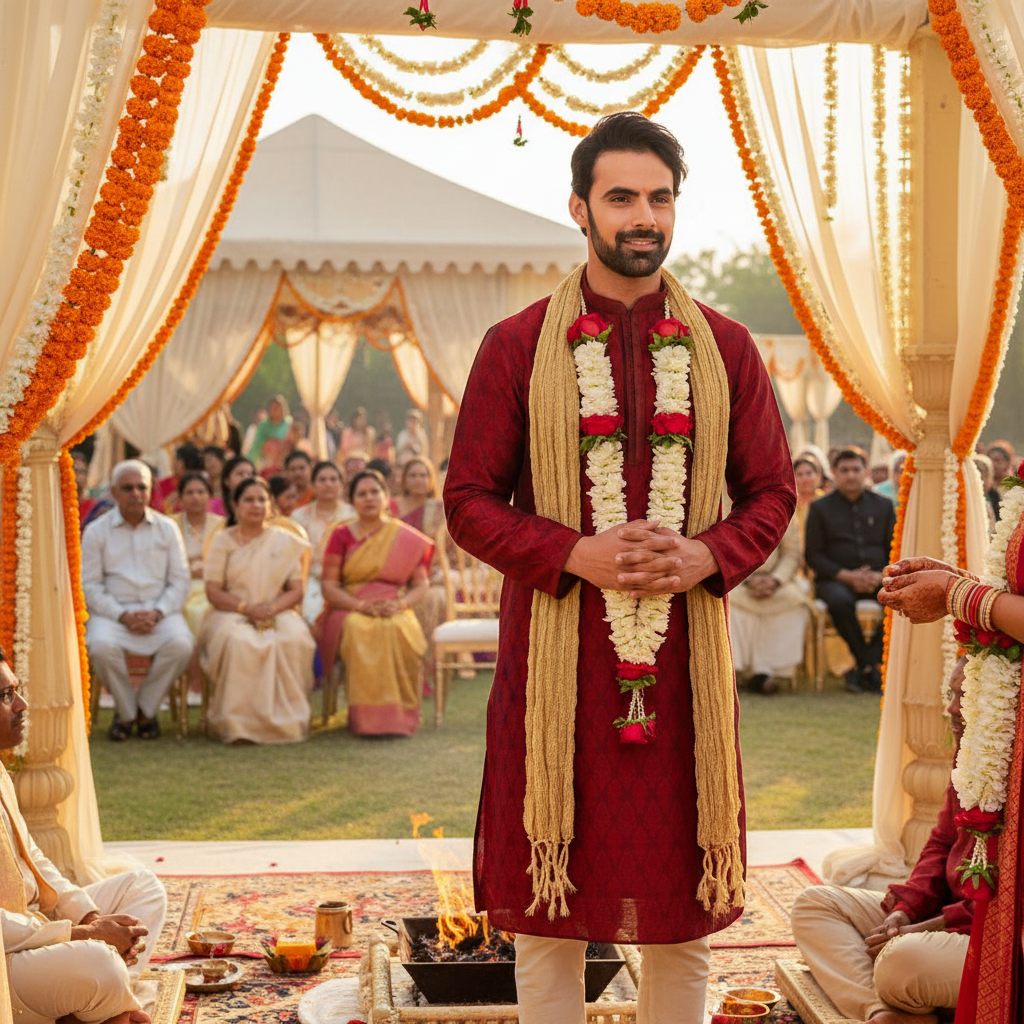
This is the big moment, the actual wedding rites, and usually the most traditional dressing point. If you’re the groom, a kurta pajama alone might be too underwhelming for the main ceremony; consider a heavily embellished kurta with a coordinating sherwani-style jacket, or simply opt for a full sherwani. (Many grooms layer a jacket or achkan over a kurta and churidar for extra grandeur.) For grooms and close male family, rich fabrics like pure silk, brocade, or velvet with hand embroidery, zardozi work, or regal prints are common.
Classic colors such as ivory, gold, maroon, or deep orange are timeless winners for weddings. A well-chosen kurta in these shades, paired with a churidar and topped with a dupatta, can look princely. Guests, on the other hand, should aim for that sweet spot: celebratory but not attempting to steal the limelight.
A fine silk or silk-blend kurta with subtle embroidery or embellishment is excellent. You might choose cooler colors like mint, peach, light blue, or beige if it’s a daytime ceremony, or slightly bolder tones if it’s an evening wedding.
Footwear for the ceremony should be traditional: mojari shoes or juttis in leather or suede that complement your outfit. And here’s a tip: fit matters more than ever at a wedding. A tailored kurta that fits just right at the shoulders and chest will always look more regal than an expensive but baggy one. We have seen countless wedding outfits over the decades, and trust us, a great fit and confident posture make you look like royalty.
The Wedding Reception
By the time the reception rolls around, the rituals are over, and it’s time to celebrate and mingle. The dress code is festive semi-formal, which means you should look sharp and stylish, but you can tone down the over-the-top traditional bling. This is a great opportunity to wear an Indo-Western-style kurta or a minimalist design.
Consider an asymmetric kurta cut or an achkan-style long coat-kurta with slight Western tailoring influences. Deep, sophisticated colors rule the evening: midnight blue, charcoal grey, black, and deep purple are all fantastic.
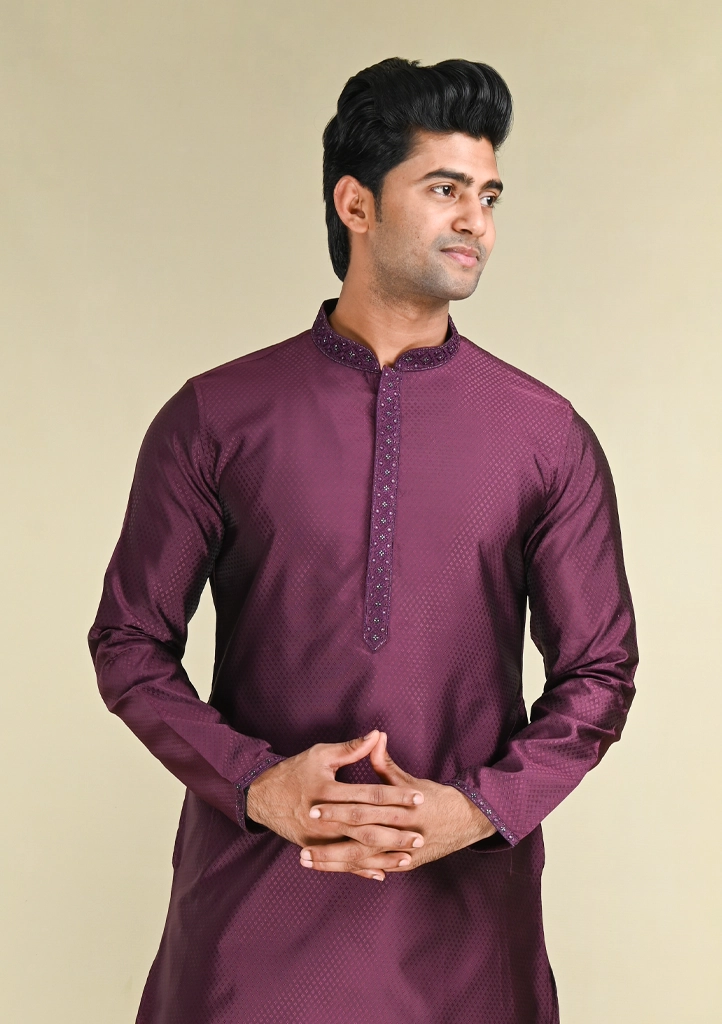
You can never go wrong with a classic black kurta pajama set either; it’s like the ethnic equivalent of a tuxedo, especially if the kurta has a sleek texture or subtle tone-on-tone embroidery.
Pair it with straight-cut pajamas or even well-fitted trousers, and finish with polished loafers or formal juttis. In contrast to the wedding ceremony, at receptions less is more in terms of embroidery; let the cut, color, and your overall polish do the talking. Avoid showing up in your loudest, brightest kurta reserved for festivals; reception style is a bit more muted elegance.
A pocket square in your jacket (if you wear a Nehru jacket or bandhgala) or a tasteful brooch can be the one statement accessory. Above all, make sure you’re comfortable enough to shake dozens of hands and maybe do a slow dance, stiff fabrics or ill-fitting outfits have no place on this night.
For more inspiration, check out our wedding collection of kurta pajamas at Nawab Parker, curated with grooms, groomsmen, and well-dressed guests in mind. From regal hand-embroidered sets to contemporary Indo-western designs, we’ve got options for every wedding event.
Festivals and Cultural Celebrations: Embrace the Color and Comfort
Once weddings are done, Indian dressing finally gets to relax.
Festivals are when your kurta pajama gets to have the most fun. Whether it’s Diwali, Eid, Rakhi, Navratri, Durga Puja, or any cultural celebration, the general style mantra is: bright, traditional, and comfortable. Unlike weddings, where there can be a fine line to walk, festivals encourage personal expression and cultural flair.
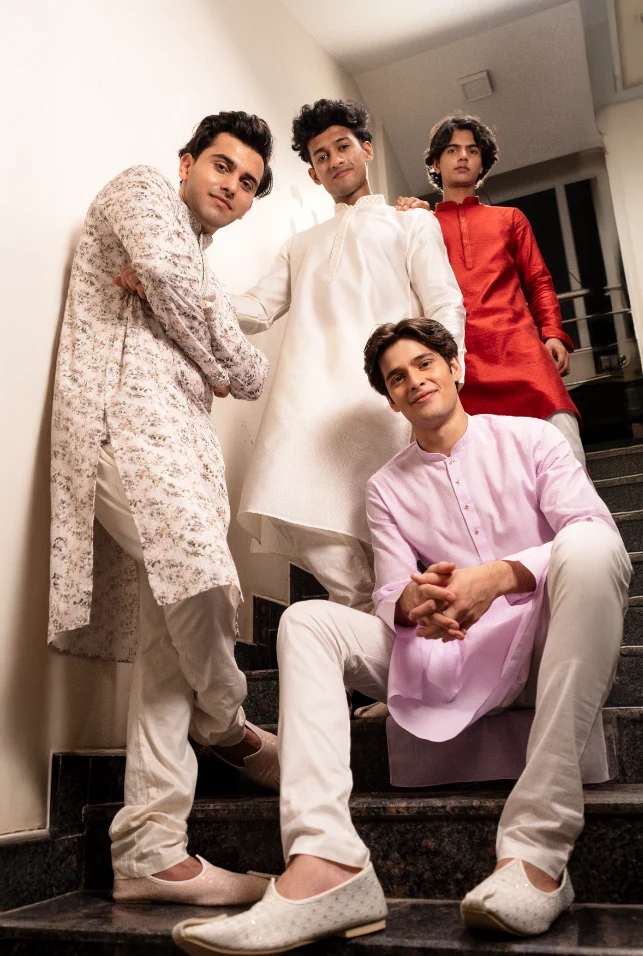
Raksha Bandhan, or Rakhi, is a heartwarming festival celebrating the bond between siblings. The dress code for Rakhi is usually smart casual ethnic; you want to look festive for the family gatherings and photos, but the atmosphere is more relaxed than, say, a wedding. A kurta pajama strikes this balance perfectly, offering a mix of tradition and ease.
For Raksha Bandhan, feel free to embrace vibrant colors and joyous prints. This festival often falls in late summer (around August), so seasonal comfort is key. Cotton kurtas are a popular choice for Rakhi, as they keep you cool during daytime celebrations while still looking crisp. Don’t be afraid to experiment with bold hues; Raksha Bandhan is all about color and cheer.
In fact, it’s common to see men sporting everything from deep maroons and royal blues to bright yellows on this day. Whether it’s a solid teal blue kurta or a kurta with playful prints, choose a shade that reflects the joyful mood of the occasion. Many brothers even opt for kurtas in their sister’s favorite color as a sweet gesture!
While vibrant colors are popular, some men prefer a more subtle look for Rakhi, focusing on style details. One trendy approach is to wear a plain or lightly embroidered kurta and layer it with a classy jacket (bandi or bandhgala). This adds a touch of formality and modern flair to your outfit.
For example, you could wear a pastel shade or earthy-toned kurta and pair it with a contrasting Nehru jacket or bandhgala (closed-neck blazer), a combination that’s very much in vogue. Pastel shades (like mint green, baby pink, or sky blue) and earthy tones (like beige, olive, or rust) in luxurious fabrics such as silk or jacquard can look sophisticated while still being festive. This layered look not only enhances your appearance but also gives a nod to contemporary style, showing that you’ve dressed up specially for the occasion.
For daytime festivities (like morning pujas or society celebrations), lean towards breathable fabrics and bright, cheerful colors. A cotton or cotton-silk kurta in hues like saffron, turquoise, mint green, or sky blue can look festive without making you swelter in the sun.
Traditional prints or weaves (think block prints, Ikat, or minimal Ajrakh patterns) also shine here, as they instantly signal heritage. For example, on a Diwali morning or an Eid prayer gathering, you might opt for a simple yet elegant light-colored kurta pajama to keep things formal yet celebratory.
When the evening comes and it’s time for card parties, family feasts, or garba dances, you can dial up the richness. Silk kurtas or those with a slight sheen (like tussar silk or satin blends) in deeper tones are a hit at night. Maroon, royal blue, purple, or bottle green are festive favorites.
Don’t shy away from gold or silver accents; a bit of zari embroidery on your collar or cuffs, or a kurta with a subtle brocade, catches the light beautifully as you mingle or dance.
The idea is to look joyful and bold. Some festivals also demand movement, not just appearance. For Navratri, the nine-night festival leading up to Dussehra, is a time of energetic dances (Garba and Dandiya Raas), vibrant colors, and devotional celebrations across India (especially in Gujarat and other parts of the West and North). Dressing for Navratri means embracing bright hues and traditional designs that allow freedom of movement. Men’s kurta pajamas for Navratri should be festive, comfortable, and eye-catching, perfect for those lively dance circles and cultural evenings.
The traditional Garba outfit for men in Gujarat is the kediyu (a short, flared kurta) with dhoti or pajamas, often decked with mirror work and embroidery. Even if you’re not wearing the full kediyu, you can incorporate elements of that style into your kurta pajama choice.
While that’s optional, it’s a cool way to participate. Regardless, for dance-heavy events, ensure your outfit allows easy movement, with side slits in the kurta, not-too-tight pajamas, and shoes that won’t fly off (Kolhapuri sandals or strapped leather sandals are great, or stick with mojaris, which stay on firmly).
Accessories during festivals can be a bit more playful: a colorful waistcoat over your kurta can add a snazzy layer (and pocket space for those mithai snacks!).
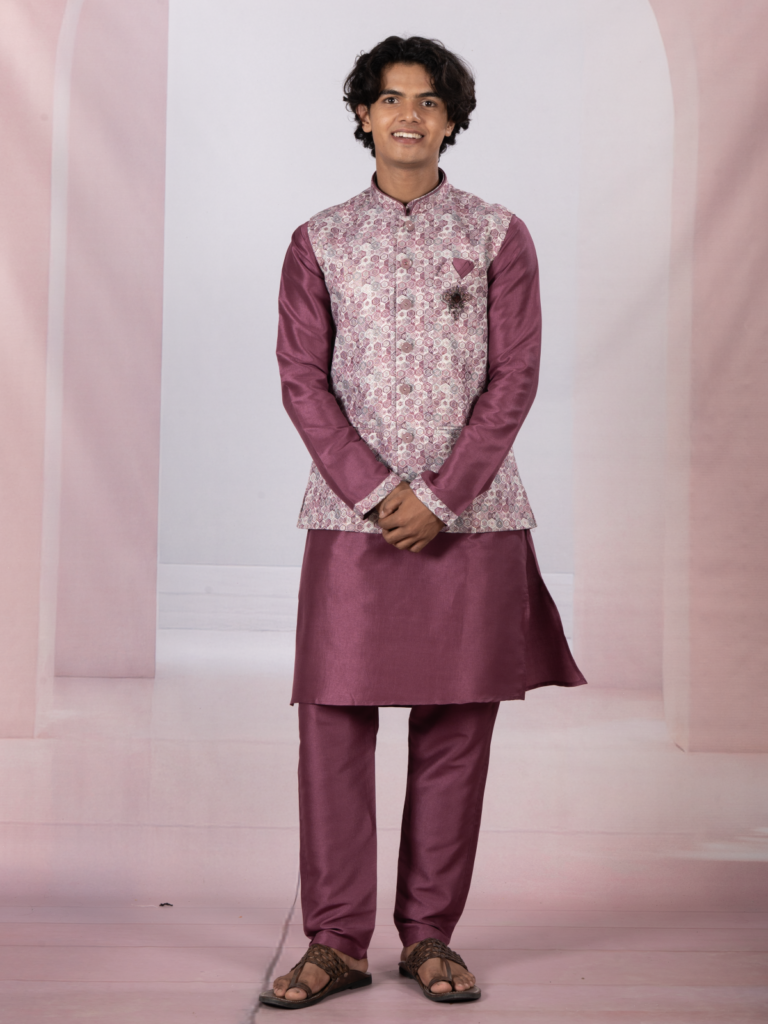
Try a printed silk stole draped on one shoulder for a touch of elegance if it’s a cooler evening. However, avoid going too overboard mixing East and West during traditional festivals; for instance, skip the baseball cap or the flashy designer belt buckle over a kurta, it just breaks the ethnic vibe. Save fusion experiments for less culturally rooted events.
One more thing: colors have meaning, but ultimately wear what makes you feel festive. Many choose green or white for Eid, vibrant red or multicolor for Holi (though frankly, wear old clothes for Holi that you don’t mind getting stained), and new clothes in bright shades for Diwali.
The bottom line is, festivals are about positivity; your outfit should reflect that. Don’t be the guy in a black kurta at Diwali looking like you missed the memo. Even if you love darker clothes, add a pop of color in your jacket or pocket square to lift it.
Style Tip: It’s smart to have a few dependable festival kurtas in your wardrobe. We recommend owning at least one statement kurta (for example, a rich royal-blue silk piece with subtle embroidery) that you can pull out for any major festival party. If you’re looking to expand your collection, If you are dressing specifically for Diwali, see our Kurta for Diwali collection and choose based on evening lighting (richer tones photograph better).
Crafted by Nawab Parker — refined fabrics, elegant hues, effortless drape.
Religious Ceremonies and Pujas: Keep It Respectful and Classic
Not every traditional gathering is a full-on celebration. Sometimes you’re attending a solemn religious ceremony, a prayer meeting, or a puja at home. In these situations, your kurta pajama should reflect the tone of reverence and simplicity. Fortunately, the classic kurta pajama was practically made for this, it’s respectful, comfortable, and elegant without being flashy.
For most religious events, white is the undisputed king. A crisp white kurta pajama in cotton or a cotton-silk blend exudes purity and simplicity, which is often the mood of the occasion.
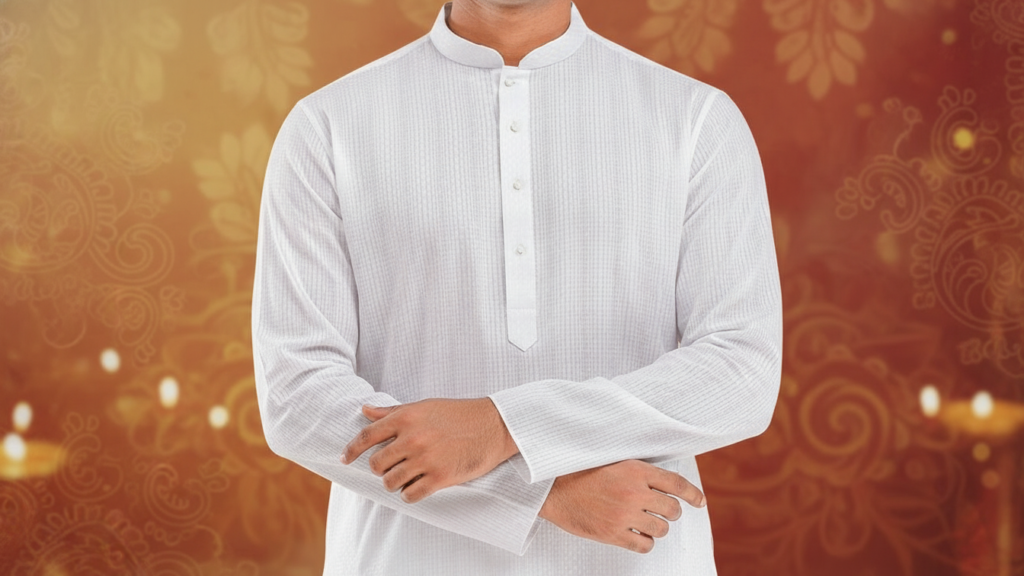
If not pure white, other light shades like cream, off-white, beige, or very soft pastels (think pale yellow or a light sky blue) are perfectly appropriate. The idea is to avoid loud, distracting colors. You’re not there to make a fashion statement; you’re there to participate in a spiritual or community ritual respectfully.
Fabric choice is key too. Go with breathable, natural fabrics, a temple hall packed with people or a home havan with the fire can get warm. Lightweight cottons, linen-cotton blends, or khadi are excellent picks to stay cool and comfortable through the prayers. They also have that earthy, traditional texture that suits the ambiance.
Save the silks and heavy materials for happier, celebratory days. An exception might be something like an Eid prayer. Eid, whether it is Eid ul-Fitr, marking the end of Ramadan, or Eid ul-Adha (Bakrid), is a time of great rejoicing, prayers, and social visits in the Muslim community. It’s customary for people to wear new clothes on Eid, symbolizing renewal and gratitude.
For men, a kurta pajama (often along with accessories like a prayer cap) is a classic and dignified choice for Eid festivities. The style for Eid tends to be graceful and somewhat understated during the prayers and can be more ornate if attending Eid parties or dinners later in the day. Let’s break down how to pick the ideal kurta pajama for Eid.
Classic Eid Morning Look (Comfort and Tradition): On Eid morning, the day usually begins with special prayers (Eid namaz) at the mosque or Eidgah. Attire for this is often traditional and modest.
Many men prefer white or light-colored kurtas for the morning prayers, as wearing white is considered Sunnah (commendable practice) by many, it’s associated with purity and simplicity. You will see a sea of men in white, cream, or light pastel kurtas and pajamas at Eid gatherings in the morning. A simple white cotton kurta pajama paired with a topi (prayer cap) is timeless and respectful. Traditional fabrics like cotton and linen are popular not only for their comfort in possibly warm weather (Eid ul-Fitr often falls in summer months) but also for the classic look they present.
These fabrics are breathable, which is ideal if you’ve been fasting for a month (comfort is appreciated!) and also because Eid prayers might be outdoors in large grounds. The focus in the morning is on the prayer, so keep the design minimal: maybe a bit of subtle embroidery on the collar or a jacquard woven pattern is enough.
As the day progresses, people visit relatives, exchange greetings (Eid Mubarak!), and enjoy feasts. Here you can introduce a bit more flair into your outfit if you like, especially if you plan to attend an Eid gathering or host one.
Modern Eid Style (Evening Elegance): Modern Eid kurta pajamas often strike a balance between traditional cuts and contemporary detailing. In the last few years, we have seen Eid dressing shift in one clear direction: Men keep the morning simple and upgrade the fabric for evening gatherings. Silk, jacquard, or jamawar fabric kurtas in soft shades (like a steel grey, olive green, or baby blue) or richer jewel tones (deep navy, bottle green) are in trend for evening get-togethers.
These might feature detailing like Mandarin collars with embroidery or decorative buttons. Since Eid is also about family portraits and social media pictures nowadays, dressing up a notch is common, while still keeping the modesty in mind (so, typically long sleeves, not too tight, etc.).
Many young men opt for Pathani suits (a style of kurta with two breast pockets, often paired with salwar pants) for a stylish Eid look that has cultural roots, especially popular in North Indian and Pakistani Eid outfits. A Pathani kurta in black or dark green with white trousers and a waistcoat can look very dapper for an Eid dinner.
Crafted by Nawab Parker — graceful cuts, balanced richness, and timeless festive polish.
Colors: There isn’t a strict color code for Eid, though green has a special place in Islamic culture. You’ll often see touches of green, but it’s not mandatory by any means to wear green. People wear all colors, though generally leaning towards dignified and solid colors rather than extremely loud patterns.
Pastels have been quite in vogue for recent Eids, they give a fresh, daytime festive vibe. On the other hand, emerald green, royal blue, and other jewel tones are also popular, symbolizing prosperity and celebration. A lot of men also love wearing shades of cream, gold, or grey, which look elegant and festive without being flashy. If you have multiple friend circles to visit, you could even do a wardrobe change: a light kurta for daytime and a richer colored one for the evening party.
Embellishments & Ensemble: For a full traditional look, consider pairing your kurta with a waistcoat (Nehru jacket), especially if your kurta is plain. A contrasting Nehru jacket, say, a printed or woven design, over a solid kurta instantly adds style. During Eid ul-Adha, which sometimes involves attending the sacrifice or being outdoors, you might keep it simpler (maybe avoid very light colors if you’ll be at a farm or so).
During Eid ul-Fitr, since it’s all about visiting and eating Sheer Khurma (sweet vermicelli pudding) at everyone’s home, you can wear slightly more delicate fabrics.
Footwear-wise, Kolhapuri sandals or leather slippers are widely worn, as they are easy to slip off when entering homes or the prayer area (since shoes are removed for prayer). Mojaris or even loafers in a pinch can work for more formal gatherings.
One unique accessory to Eid is the Itr (perfume), many men will have a dash of traditional perfume on, as smelling nice is part of the Sunnah for Eid. While it’s not a visible part of the outfit, it complements the overall presence.
Don’t forget grooming: a fresh haircut or trim before Eid, neatly trimmed nails, etc., are all part of the preparation. A kurta pajama will always look best on Eid day when you’ve taken care of these small grooming details.
In essence, dressing for Eid is about respecting the moment of prayer and then rejoicing in the celebration with loved ones. A kurta pajama captures both sides of this coin. It’s modest and comfortable for the prayer and exuberant enough (with a change of color or the addition of a jacket) for the social revelry that follows. As you say your Eid prayers in that crisp light kurta, you stand together with the community in humility and gratitude. And as you later clink glasses of sherbet and laugh with cousins in your stylish kurta, you embody the joyful, generous spirit of Eid.
Your kurta design should be understated. Tone-on-tone embroidery (like white thread work on white fabric) or very minimal embellishments (a small border on the collar or sleeves) are fine.
But avoid anything flashy, no mirror work, no big contrast embroideries, and definitely no blingy sequins. If your kurta has buttons, something simple and not shiny is best (wooden, fabric-covered, or matte finish buttons instead of flashy metallic ones).
For footwear, go with classic and clean options. Kolhapuri chappals or simple leather sandals work well, or even basic loafers if you want your feet covered.
It’s common in many religious settings to remove your shoes, so make sure you have presentable socks if you’re wearing closed shoes (or go barefoot in the sandals). Avoid bright sneaker-type shoes or anything that draws too much attention to your feet.
One more often overlooked detail: fit and coverage. Ensure your kurta’s length is decent (around knee-length is standard for traditional wear) and not excessively short, especially for a religious event.
And while slim fits are in vogue, a religious ceremony is not the time for a super tight, body-hugging kurta; aside from comfort issues during sitting and praying, it can come off as trying too hard. A straight cut or slight A-line cut is both comfortable and modest. If you’re wearing a dhoti or dhoti-pant instead of a pajama for a Hindu ceremony, practice tying or wearing it securely; you don’t want wardrobe issues mid-ritual.
In summary, for any puja or prayer gathering, stick to the mantra: simple, sober, and comfortable. By doing so, you show respect for the occasion and can focus on the experience rather than fussing with your outfit. Our recommendation is to always have at least one plain white kurta pajama set in your wardrobe; it’s a failsafe you’ll use countless times. (In fact, our customers’ favorite for this is a soft white textured kurta set that looks great on everyone, a true essential for men of all ages.)
If pure white washes out your complexion, try a very light beige or ivory. You’ll get the same respectful look without feeling like a ghost. And after the event, take good care of your light-colored kurta; keep it bleach-white for next time by dry cleaning or careful home washing. A crisp, clean kurta always makes a better impression, especially at a religious gathering.
Casual Gatherings and Office Wear: Understated Style for Everyday Ethnic
You don’t have to wait for a big celebration to break out the kurta pajama. Wearing a kurta in more everyday settings, be it a casual family get-together, a friends’ dinner, or an office ethnic day, is a fantastic way to showcase your style and cultural pride. The trick is to dial down the formality and integrate the kurta into a smart-casual look.
For casual outings or family functions (think a Sunday brunch with relatives, a low-key housewarming, or a casual birthday party), comfort and subtle style are your friends. A short kurta or medium-length kurta (ending around mid-thigh) works really well in laid-back settings. You can pair it with well-fitted jeans or chinos instead of the traditional pajama for a modern Indo-Western vibe.
For instance, a pale blue or mint green cotton kurta over dark blue jeans is a classy yet relaxed combo. If you prefer a full traditional look, choose a plain or lightly patterned kurta in cotton, linen, or a cotton-silk blend, and wear a matching pajama, but make sure the kurta isn’t heavily embroidered or you’ll look overdressed for a casual event.
Prints can be fun here: try geometric prints, small florals, or an Ikat print kurta for a bit of character. Just stick to one statement piece; if your kurta has a bold print, keep the pants neutral (and vice versa).
Finish with easy footwear: loafers, slip-on leather sandals, or even clean white sneakers can work with a short kurta and jeans for a youthful look. (Yes, we said sneakers; when done intentionally as a fusion statement with a short kurta, it can look cool. Just avoid athletic logos and crazy neon colors on the shoes, and ensure they’re spotless.)
Now, for the office or professional settings: Many workplaces in India have occasional ethnic dress days (like during festivals or culture days), and some more creative or casual offices might even allow kurtas as part of regular attire on Fridays.
The goal here is to appear polished and work-appropriate while wearing a kurta pajama. Opt for solid colors or very subtle patterns; a pinstripe or fine self-pattern is okay, but big bold motifs are not ideal for work. Excellent choices are shades like beige, grey, muted blues, maroon, or even pastel pink if you’re a bit fashion-forward; these colors stand out just enough without screaming for attention.
Fit is crucial: a slightly tapered, well-cut kurta that fits like your dress shirts (not too loose, not too tight) will look professional. You could choose a Nehru-collar short kurta that almost resembles a dress shirt in cut; it tucks just at mid-thigh and can be worn over slim trousers. Pair your kurta with formal trousers or khaki chinos for a clean office look.
A crisp white kurta with charcoal trousers and brown loafers, for example, can look incredibly smart at work; think of it as your substitute for a collared shirt on an ethnic day. Completing the outfit with polished shoes (moccasins, loafers, or even formal sandals) is important; do not wear flip-flops or overly casual footwear to the office just because you’re in a kurta.
Also, grooming and ironing play a big role here: an unironed kurta or one with missing buttons will destroy the impression. Treat it like formals: pressed clothes, neat hair, and maybe throw on a matching Nehru jacket if it’s a slightly more important day or an office event (it immediately makes the ensemble feel structured and business-casual appropriate).
What to avoid in casual/office scenarios? Mainly, steer clear of the extremes. Don’t be the guy who wears his wedding sherwani to the office Diwali party; that’s overkill and frankly a bit comical. Likewise, a super long flowing kurta with huge flared pajamas might look too costume-like in a work environment; save it for festivals. Keep it classy and restrained.
The idea is that you could head to a meeting in your kurta and not feel out of place. Many men successfully rock a kurta in daily life by pairing it in toned-down ways; you’ll notice it feels natural when you’re confident about the balance of traditional and modern elements.
We at Nawab Parker often suggest keeping a couple of versatile cotton kurtas in rotation for these purposes. They’re the ones you’ll reach for when you want a touch of ethnic style without the heaviness of a grand outfit.
Trust us, once you start incorporating kurtas into your casual wear, you’ll wonder why you ever limited them to weddings and festivals. (Pro tip: Check out our range of cotton kurta classics; they’re cut for comfort but tailored enough to look sharp at work or a casual dinner.)
Once you start wearing kurtas beyond just special occasions, wardrobe planning stops being theoretical and becomes practical.
Building Your Kurta Pajama Wardrobe: The Must-Haves
To be ready for any occasion at a moment’s notice, you’ll want to stock your wardrobe with a few strategic pieces. Here’s what we consider the essential building blocks of a versatile kurta pajama collection:
The Classic White Kurta Pajama:
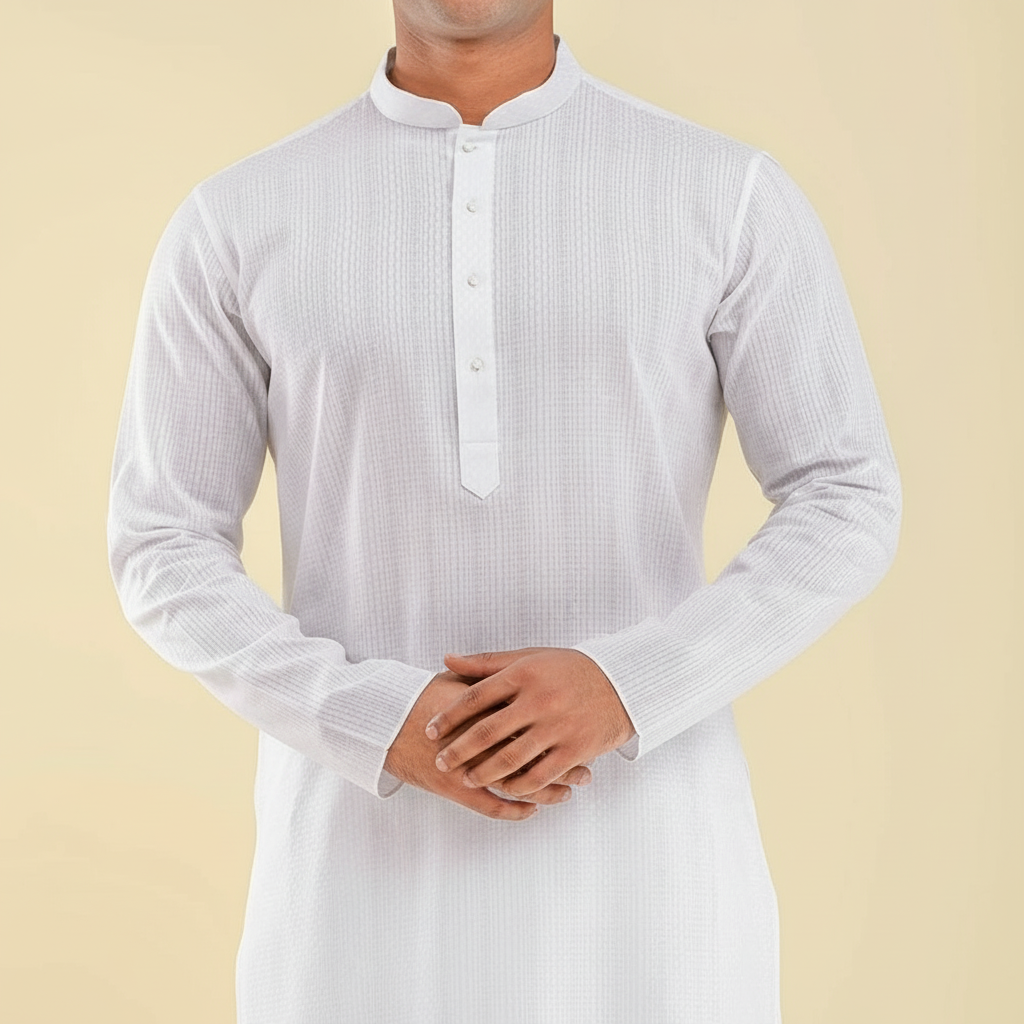
As noted, a pristine white (or ivory) cotton kurta pajama set is non-negotiable. It’s your go-to for religious events, Independence Day, or whenever you want to keep it simple and traditional. It also doubles as a great base to layer colorful jackets or dupattas for a different look. (If you fear white maintenance, a very light beige or cream is a close second choice.)
Silk or Brocade Kurta for Weddings:
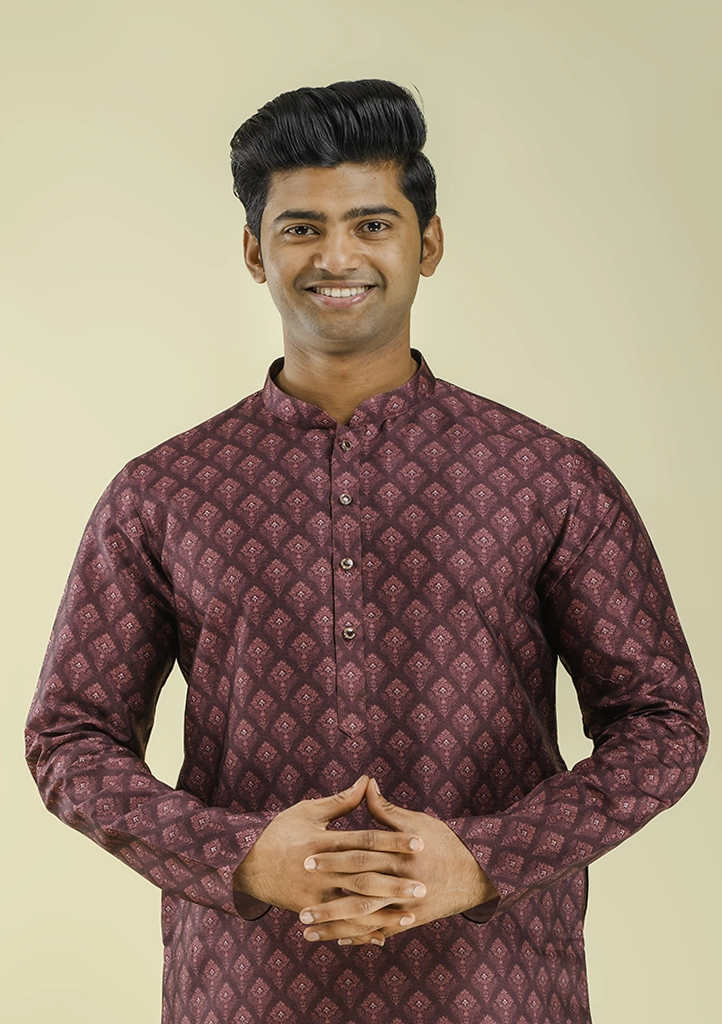
Invest in one high-quality kurta set for the big occasions, something in silk, Banarasi brocade, or with detailed handwork. This could be a regal gold/cream piece or a deep-colored one like navy with antique embroidery. This is what you’ll pull out when attending (or headlining) weddings, receptions, or other formal celebrations. You might not wear it often, but when you do, it makes an impact.
Vibrant Festive Kurta:
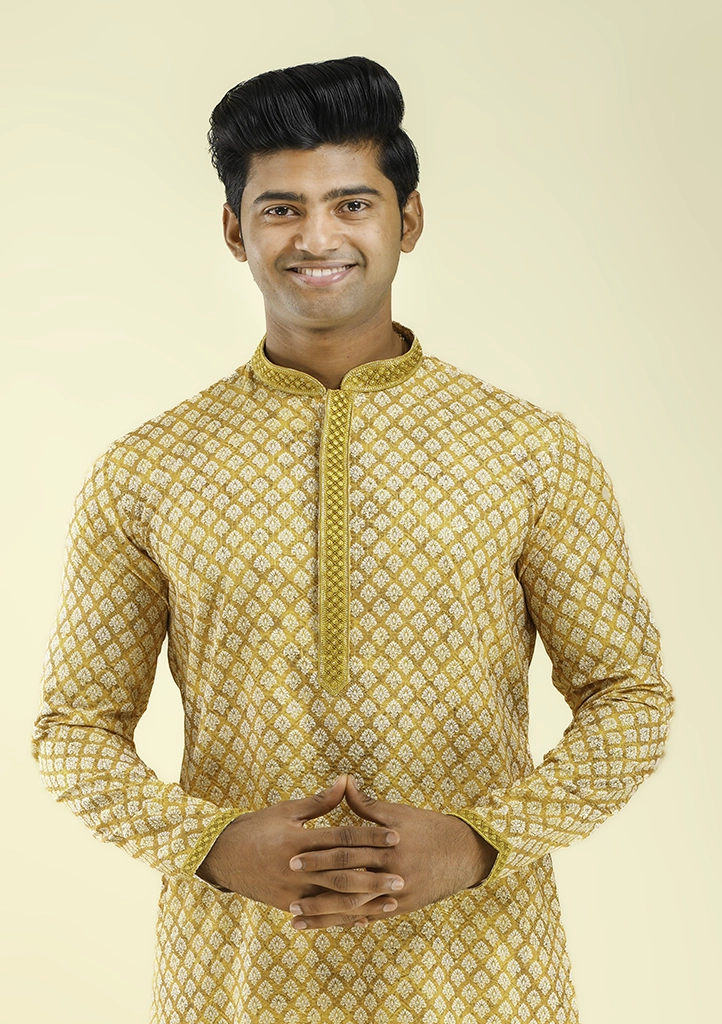
Have at least one bright, celebratory kurta that you love wearing for festivals. It might be a rich red for Diwali, an emerald green for Eid, or a multi-colored jacket-style kurta for Navratri. The point is it should instantly put you in the festive mood and have some unique character (traditional motif prints, mirror work, etc.) that you might not wear to anything except a cultural celebration. This is your statement piece for those “Indian dress theme” days.
Everyday Cotton Kurta (or Two):
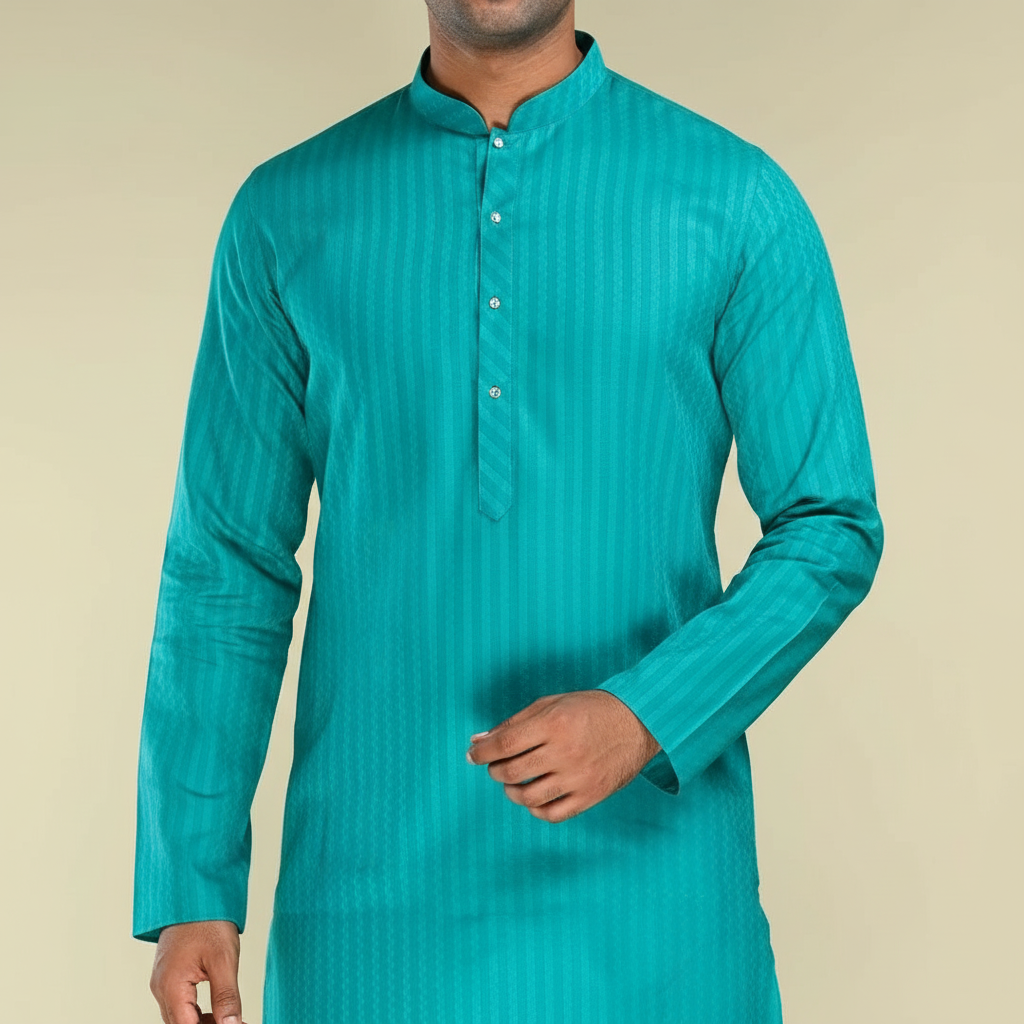
These are kurtas you can wear on a casual day out or to work. Solid colors or subtle patterns in breathable fabrics. It’s wise to have a light color (like sky blue or mint) and a darker one (like olive green or maroon) so you have options. These you’ll likely wear the most, so ensure they fit well and are easy to wash and re-wear.
A short kurta that ends around the hips is a great variant to pair with jeans for errands or coffee with friends; it’s the Indian tunic equivalent of a casual shirt.
A Nehru Jacket (Bandi), optional but highly recommended: This isn’t a kurta pajama by itself, but adding a Nehru vest to your wardrobe can multiply your outfit choices. You can slip it over that simple white kurta to make it instantly wedding-appropriate or wear it on top of a casual kurta to polish it up for a meeting or dinner. Pick one in a versatile color like grey, navy, or beige to start with; it should complement multiple kurta colors.
Bottom Wear Variety:
Ensure you have both churidars (the snug, gathered-at-ankle leggings) and straight pajama pants. Churidars give a more formal, elegant silhouette for big occasions; pajamas or even Aligarhi pants (straight pants) are great for comfort and a slightly modern look. If you’re adventurous, keep one dhoti or dhoti-pant for those traditional moments; they aren’t everyday-friendly but can be a great style statement when worn confidently.
Having these staples means you can mix and match to create the perfect ensemble for any event without scrambling last minute. For example, your bright festival kurta could be toned down for a casual family dinner if you pair it with simple pajamas and no-fuss sandals. Or your everyday pastel kurta could be amped up for a friend’s engagement by adding the Nehru jacket and a shiny churidar. The possibilities expand when you have good pieces to work with.
Remember, the goal of building a wardrobe is versatility. You don’t necessarily need dozens of kurtas; you need a smart selection that covers all bases. Whenever you acquire a new kurta pajama, ask yourself, “What events can I wear this to?” If it fills a gap (like you realized you had nothing appropriate for a cousin’s upcoming daytime engagement, for instance), then it’s a smart addition. Over time, you’ll curate a collection where you always have the right outfit ready to go.
At Nawab Parker, we craft our collections with this versatility in mind. Many of our pieces are designed to be dressed up or down. When you browse our kurta pajama collection, you’ll notice we highlight if a style is ideal for multiple occasions. We want you to get the most mileage out of every outfit.
How Does Fabric Matter?
A lot of men shop for kurta pajamas like they are shopping for a color. The smarter way is to shop it like a setting. Because fabric decides three things instantly: how you feel, how you photograph, and how formal you look (even if the kurta has no embroidery).
Here’s a simple way to think about it:
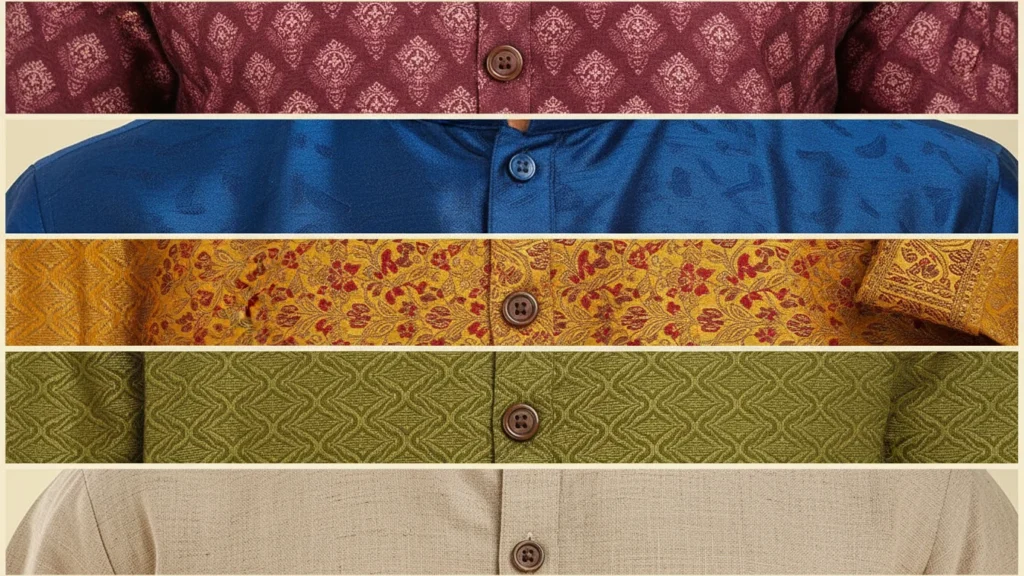
Cotton:
Cotton is breathable, forgiving, and reliable. It works for religious events, casual gatherings, office wear, daytime festivals, and even a low-key daytime wedding if the fit is clean and the color is right. The only time cotton struggles is when the room is dressed up and you are trying to look “evening formal.”
Cotton-Silk: The Most Useful Middle Ground
If you want one fabric that can handle multiple occasions, cotton-silk is it. You get comfort with a little richness, which is perfect for mehndi nights, festive dinners, family functions, and “I want to look polished but not overdressed” moments.
Silk/Brocade/Jacquard: When You Need That Rich Look
This is where weddings and receptions live. These fabrics carry shine, structure, and depth, which is why they read premium in photos. Just be honest about the weather and venue. Heavy silk outdoors in summer is a classic mistake (we have all seen that guy sweating through the ceremony).
Linen: The Summer “Quiet Luxury” Option
Linen is breezy and classy, especially for daytime events. It works beautifully for garden functions, daytime weddings, brunch-style celebrations, and casual festive wear. It wrinkles, but linen is allowed to wrinkle (it is part of the charm). Just keep the overall look clean.
Rules:
- Hot daytime events → cotton / linen / light cotton-silk
- Evening functions → cotton-silk / silk / jacquard
- Heavy wedding nights → silk, brocade, textured weaves (with good fit)
Have You Ever Wondered: “Why Does My Kurta Look Great on the Rack but Odd on Me?”
We have all bought a kurta that looked perfect… until we wore it. The color is right, the work is nice, but something feels off. Most of the time, it is not the design. It is fit specifically for shoulders, length, and sleeve balance.
Here’s the easiest fit check (do this in 30 seconds before you commit):
The 5-Point Fit Check
1) Shoulders: the shoulder seam should sit right on your shoulder edge. If it drops down the arm, the whole kurta will look sloppy.
2) Chest & torso: it should skim, not cling and not billow. You should be able to move comfortably without pulling.
3) Length: longer reads more traditional and formal; shorter reads more casual and modern. (If you are shorter, overly long kurtas can make you look stumpy; get it hemmed.)
4) Sleeves: too long looks careless; too short looks like you outgrew it. The sleeve should end neatly around the wrist area.
5) Pajama/churidar balance: the bottom should not ruin the silhouette. Too baggy looks messy; too tight looks uncomfortable. Pick based on occasion and comfort.
If you are buying ready-made, compromise on almost anything except shoulders. A tailor can fix length and sleeves easily. Shoulders are the hardest to repair properly.
Common Mistakes to Avoid with Kurta Pajama Styling
Even the most seasoned dressers can slip up when styling ethnic wear. Here are some of the biggest mistakes to steer clear of when you don a kurta pajama and how to avoid them:
Poor Fit, “Baggy Is Not Boho”: An ill-fitting kurta (too loose and you’re drowning in fabric; too tight and it’s pulling at the buttons) is the fastest way to look sloppy. Don’t treat kurtas like one-size-fits-all robes. Get them tailored if necessary, especially length and sleeve length.
The shoulder seam should sit on your shoulder edge, not halfway to your bicep. A well-fitted kurta instantly elevates your look, whereas a baggy one can make even a young man look like he’s wearing his grandfather’s hand-me-down.
Choosing the Wrong Fabric for the Weather: Rocking a thick silk kurta in 40°C summer heat, we’ve all seen that poor guy sweating buckets. Match your fabric to the season and setting. Lightweight cottons and linens for hot daytime events, and richer silks, brocades, or velvet (if ever) only for cool evenings or winter weddings.
Likewise, don’t wear a flimsy material on winter nights and shiver the whole time. Owning a variety of fabrics helps: you should have options in cotton, silk, and blends so you’re prepared for any climate.
Over-Accessorizing Like a Christmas Tree: Yes, accessories can complete an ethnic look, but there’s a line between stylish and tacky. Common offenses: wearing sunglasses on the forehead with a kurta at an evening event (why?), too many chains or necklaces competing with an embroidered neckline, or belts on kurta pajamas (almost never a good idea unless it’s a specifically styled look like a waist sash on a sherwani).
Choose one signature accessory, for instance, a pocket square or a brooch or a statement watch, but not all of them together. And always align accessories with the occasion: a floral boutonniere might be charming at a daytime mehndi but looks odd at a puja.
Inappropriate Footwear: The number of times we’ve seen men wear running sneakers with kurta pajamas at events is depressing. Unless you’re deliberately doing a fusion look at a casual setting, avoid sports shoes. Similarly, formal lace-up shoes (like Oxfords) usually don’t complement kurta pajamas either.
The safe bets are traditional footwear (mojaris, juttis), loafers, or sandals depending on formality. If you’re going with something like kolhapuri chappals, make sure your feet are presentable (yes, people notice). And please, no white socks showing under a kurta pajama. If you must wear socks with mojaris due to sweat, wear low-cut neutral ones that don’t show.
Ignoring the Power of Contrast and Coordination: You might have a great kurta and a great pajama, but do they actually look good together? One mistake is grabbing mismatched pieces that clash. A heavily printed or textured kurta usually pairs best with a simple solid bottom in a coordinating color.
If both your kurta and pajama have strong patterns or colors that fight each other, the whole outfit looks chaotic. Also, consider the dupatta or jacket (if any) as part of the color scheme, it should complement, not look random. When in doubt, a neutral pajama (white, off-white, black, or beige) will work with most kurtas.
And if your kurta is a neutral, you can experiment with a slightly contrasting pajama (like a maroon pajama with a cream kurta, for example) for a bit of pop, as long as it subtly picks up a tone from your accessories or detailing.
Dressing Completely Out of Context: This is a big one. Each occasion has an unspoken dress code. Showing up in a loudly bedazzled kurta to a small family lunch is overkill (people might playfully ask if you’re coming straight from a groom’s procession).
Conversely, wearing a simple khadi kurta to a grand reception will make you feel underdressed when everyone else is in silks and sequins. Always consider the scale of the event. If it’s a modest affair, tone it down. If it’s grand, step it up. When you’re unsure, err on the side of a little dressy; you can remove a fancy jacket or accessory to tone it down if needed, but you can’t magically add one when you’re already at the venue.
Neglecting Grooming and Outfit Maintenance: This isn’t exactly about the kurta pajama itself, but it’s integral to pulling off the look. Wrinkled fabric, sweat stains, missing buttons, or an unkempt look (unkempt hair, messy beard) can ruin an otherwise great ensemble. Iron your kurta properly (inside-out for embroidered pieces).
Check that all buttons are secure and zippers (if any) work. Carry a stain remover pen if you’re prone to spillage; a big oil stain on your pajama during a function is not a good look. Also, traditional wear looks best when you’re well-groomed: a neat haircut or styled hair, a trimmed beard or shave and a light perfume (don’t overpower with strong cologne) will make you feel as good as you look.
Avoiding these mistakes comes down to attention to detail and situational awareness. The goal is for your kurta pajama to enhance the occasion, not stick out awkwardly. If you’re ever in doubt, remember the basics: good fit, appropriate formality, and a touch of personal style, and you’ll be golden.
How to Build a Kurta Wardrobe Without Buying Ten Kurtas
If you want to be “covered for every occasion,” you do not need a closet full of outfits. You need a small set of smart staples that can be dressed up or down with one jacket, one stole, and one good pair of shoes.
Here’s the easiest way to do it:
Start With 3 (This Covers Most Real Life)
1) A clean white/cream kurta pajama for religious events and simple gatherings.
2) A versatile cotton-silk kurta in a refined color (navy, maroon, bottle green, or beige) that can handle festive and semi-formal events.
3) One “proper occasion” kurta (silk/jacquard/brocade texture) for weddings and receptions.
Add 2 More If You Want Full Coverage
4) A bright festive kurta (Diwali/Eid/Navratri energy).
5) A short casual kurta for jeans/chinos (daily ethnic style).
The 3 Things That Multiply Your Options (Without Buying More Kurtas)
A Nehru jacket: instantly makes a plain kurta look wedding-ready.
Good footwear: a clean pair of mojaris/juttis or loafers upgrades everything.
A stole/dupatta: adds drama for weddings without changing the whole outfit.
If you are trying to spend smart, use “cost per wear” logic. A kurta you can wear 8–10 times is a better buy than a flashy piece you wear once and forget.
Final Words
Dressing for the occasion is an art that goes beyond mere fashion, it’s a way of participating in the cultural tapestry and emotions of the moment. From the jubilant splashes of color at Holi to the dignified hues of Eid, from wedding extravagance to the serene whites of a puja, the humble kurta pajama proves to be the ultimate attire for Indian men across a spectrum of events. Its enduring popularity lies in its versatility, comfort, and cultural resonance, allowing it to be adapted in countless ways to suit each unique celebration.
As we’ve seen in this comprehensive guide, choosing the right kurta pajama involves considering the significance of the occasion: the colors that matter, the level of formality, and the practical aspects (like fabric and fit) that will keep you comfortable through the day or night. A few consistent themes emerge.
Lighter fabrics and tones dominate more reverent or daytime events (think cottons and creams for pujas or Eid prayers), while richer fabrics and bolder designs come out for big celebrations (silks, brocades, and vibrant embroidery for weddings, festivals like Diwali, etc.). Accessories and layering can further elevate your look, a stylish jacket for Rakhi, a traditional turban for weddings, or a simple scarf for a chilly evening. And sometimes, the absence of embellishment is itself a statement, as with the pure white kurta of Holi or a solemn ceremony, letting tradition and context shine above all else.
Remember, no matter how you style it, your kurta pajama should allow you to enjoy the occasion to the fullest. The most treasured memories, be it dancing like no one’s watching at your friend’s sangeet, kneeling in prayer amidst hundreds on Eid, or laughing over gujiyas with family on Diwali, will be made when you feel at ease and confident in what you’re wearing. That might mean rolling up your sleeves for the Haldi fun or standing tall in a regal sherwani-style kurta as a proud groom. With the right outfit, you’re not worrying about your clothes; you’re living the moment.
As Nawab Parker (a brand built on the love of India’s ethnic wear heritage), we encourage you to build a wardrobe of a few trusty kurta pajamas that can be mixed and matched for various occasions. Investing in quality pieces, a classic off-white set, a grand embroidered one, and a couple of festive colored jackets means you’ll always have the perfect outfit on hand. The beauty of kurta pajama is that it’s one ensemble with endless possibilities. It can be simple or opulent, traditional or with a fusion twist, but it’s always unmistakably elegant and inherently Indian.
We hope this guide has equipped you with not just style tips but also an appreciation of the cultural essence behind each recommendation. Dressing well for occasions isn’t about vanity; it’s a form of respect, joy, and participation. So next time you’re gearing up for a special event, you’ll know exactly which kurta pajama to pull out and how to style it to perfection.
In the great saga of Indian celebrations, consider your outfit as your armor of confidence and celebration. With the right occasion-based kurta pajama, you won’t just attend the event; you’ll embody its spirit. Go forth, celebrate with style, and let your attire tell a story of tradition, elegance, and festivity at every step.
Happy dressing, and enjoy every occasion like the Nawab you are!
Frequently Asked Questions
Is kurta pajama suitable for different occasions in India?
Yes. You can wear kurta pajamas for weddings, festivals, religious ceremonies, casual gatherings, and office ethnic days. Choose cotton for everyday wear, cotton-silk blends for festivals, and silk with embroidery for formal events like weddings.
Which is the best material for kurta pajama?
Cotton is best for everyday wear and religious ceremonies. Cotton-silk blends work for festivals and evening events. Pure silk (Banarasi, Tussar) is ideal for weddings and formal occasions. Linen suits hot weather and summer daytime events.
What should men wear with a kurta pajama?
Pair kurtas with pajamas (loose pants) or churidars (fitted pants). Wear mojaris, juttis, or Kolhapuri sandals for footwear. Add a Nehru jacket for formal events. You can also pair short kurtas with jeans for casual, contemporary looks.
Is kurta pajama good for a wedding?
Yes. Choose silk or silk-blend kurtas with embroidery in ivory, gold, maroon, or navy for the ceremony. Guests should wear jewel tones with moderate detailing. For mehndi/sangeet, wear brighter colors and lighter fabrics. Receptions call for minimalist dark-toned kurtas.
What should a male guest wear to a wedding?
Wear a silk or cotton-silk kurta in jewel tones (emerald, sapphire, ruby red) or neutrals (cream, beige, gold) with subtle embroidery. Pair with churidars and mojaris. Avoid the groom’s signature color and don’t overdress beyond your role.
Can we wear a kurta for a wedding reception?
Yes. Wear kurtas in dark sophisticated shades like midnight blue, charcoal, black, or deep purple. Choose rich fabrics with minimal embroidery and impeccable fit. Layer with a Nehru jacket or bandhgala. Pair with straight pajamas or tailored trousers.
What is not acceptable to wear to a wedding?
Don’t wear all-black or all-white at Hindu weddings, overly casual clothes, flip-flops, wrinkled or stained outfits, or anything more ornate than the groom’s attire. Avoid athletic shoes, shorts, or extremely Western formal wear unless specified.
What do men wear for Haldi function?
Wear bright yellow or light-colored cotton kurtas. Yellow, white, cream, or beige work best. Choose inexpensive cotton you don’t mind staining—Haldi ceremonies are messy. Pair with simple pajamas and sandals you can get dirty.
What is the dress code for Haldi and mehndi ceremonies?
For Haldi: yellow, white, or light cotton you’re okay staining. For mehndi: green, yellow, vibrant colors, prints, or florals in cotton-silk or lightweight silk. Both need comfortable, breathable fabrics, but mehndi allows more festive styling.
Which kurta pajama color is good for festivals?
Wear bright colors: royal blue, maroon, emerald green, purple, orange, saffron, yellow, or red. Gold or golden-beige also works. Avoid muted greys and blacks—festivals call for vibrant colors that reflect joy and celebration.
Which color is good for puja or religious ceremonies?
White is best, symbolizing purity. Cream, off-white, ivory, or light pastels (pale yellow, soft blue, beige) also work. Saffron or light orange suits evening prayers. Avoid dark colors like black and deep navy.
Can I wear a kurta pajama in office or for ethnic day?
Yes. Choose solid colors or subtle patterns in muted blues, greys, beiges, or maroon. Use crisp cotton or cotton-silk fabrics with well-tailored fit. Pair with formal trousers, chinos, or straight pajamas. Wear polished loafers or formal mojaris.
Written by Nawab Parker
Nawab Parker is a menswear label based in India, designing structured ethnic wear for Indian men. Our Pathani, Sherwani, and Kurta Pajama for men are crafted for real-world use across weddings, festivals, and formal settings.